Vibes Over Playlists: Why Younger Listeners Are Walking Away From Wellness Audio
The wellness audio industry has a Gen Z problem.
Not a visibility problem — younger Americans are fully aware that sleep soundscapes, guided meditations, and binaural beat playlists exist. They've grown up with them. Many tried them in high school or during the pandemic, when the apps were everywhere and free trials were impossible to avoid. But a significant and growing segment of that generation has quietly stepped back — not because the content doesn't work, but because of what it represents.
"It feels like being handed a script for how to feel better," says Maya, a 23-year-old graphic designer in Austin. "Like, here's the app, here's the voice, here's the rain sounds — now relax. It's so packaged. It doesn't feel like mine."
That word — packaged — comes up a lot when you talk to younger listeners about wellness audio. And it points to something the industry might not be fully reckoning with.
The Authenticity Problem
Gen Z came of age in an era of peak content optimization. They watched brands learn to speak in memes. They watched corporations co-opt activism. They watched "authentic" become a marketing aesthetic. By the time wellness audio arrived in its current polished form — with celebrity-narrated meditations, algorithmically curated sleep playlists, and app interfaces that look like luxury brand websites — many younger Americans had already developed finely tuned radar for what's real and what's been engineered to feel real.
Wellness audio, for a lot of them, registers as the latter.
"I know it's designed to calm me down," says Darius, a 21-year-old college student in Atlanta. "That's the whole point, right? But knowing that makes it feel manipulative. Like I'm being managed instead of actually helped."
This isn't a fringe view. A 2023 survey by a US-based digital health research group found that adults under 25 were significantly more likely than older cohorts to describe guided meditation apps as "performative" or "corporate" — words that, in Gen Z's cultural vocabulary, are close to synonyms for inauthentic.
Wellness Audio as Status Symbol — And Why That's a Turnoff
There's also the optics issue. Wellness audio has become, for better or worse, associated with a particular kind of aspirational American lifestyle — the kind that involves linen everything, overpriced matcha, and the conspicuous display of self-care routines on social media.
For a generation that's simultaneously more stressed than any before it (student debt, housing costs, climate anxiety, a job market that keeps shifting underneath them) and deeply skeptical of consumer culture as a response to systemic problems, the wellness audio aesthetic can feel like a taunt dressed up as a solution.
"It's like — here's your ten-minute meditation to feel better about the fact that you can't afford rent," says Priya, 24, a graduate student in Boston. "I'm not saying it doesn't help some people. I just can't take it seriously as a real answer to anything."
The industry, to be fair, didn't create the economic conditions Gen Z is navigating. But the way it markets itself — aspirational, premium-feeling, and often priced accordingly — can make it feel less like a resource and more like a reminder of what relaxation costs.
What They're Doing Instead
Here's where it gets interesting: Gen Z isn't rejecting the need for stress relief. They're rejecting the delivery mechanism.
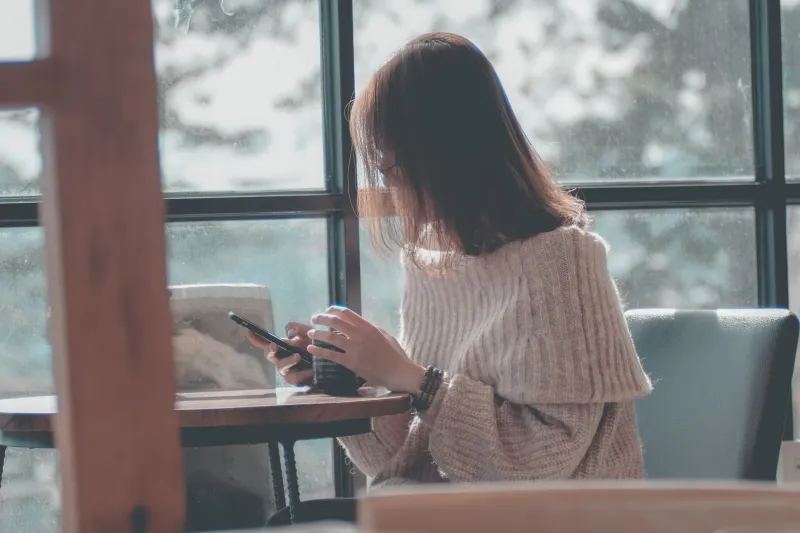
Instead of guided meditations, many younger listeners are turning to what some are calling "unintentional ASMR" — the ambient sound of other people doing ordinary things. Cooking streams. Study-with-me videos. Livestreams of someone's living room with rain hitting the window. These aren't marketed as wellness content. They're not trying to be. And that, for many Gen Z listeners, is exactly the point.
"I put on a study stream and I just feel less alone," says Maya. "It's not trying to fix me. It's just there."
Others are rediscovering analog sound environments — the background hum of a coffee shop, the ambient noise of a library, the sound of a city street from an open window. Not recorded, not curated, just present. There's a growing community on Reddit and Discord where younger users share "raw" location recordings — someone's backyard in Ohio, a train station in Chicago, a laundromat in Queens — specifically because they haven't been produced for consumption.
Some are even going further in the other direction: silence. Not the marketed silence of a premium app's "mindfulness pause," but actual, unscheduled, unmonitored quiet. No timer. No prompt. No metric.
What This Tells Us About Prefabricated Calm
The Gen Z pushback against wellness audio isn't really about the audio. It's about agency.
Dr. Simone Okafor, a media psychologist at a university in the Southeast who studies how younger generations interact with digital wellness tools, frames it this way: "What we're seeing is a generation that's deeply aware of being a consumer, even in spaces that are supposed to be about personal restoration. The awareness itself becomes an obstacle. You can't fully relax into something you're also analyzing as a product."
This has real implications for where the wellness audio industry goes from here. The current model — polished, branded, algorithmically optimized — was built for a market that was willing to outsource its calm to a subscription service. That market still exists and is still large. But it's not growing uniformly across age groups.
The brands that figure out how to offer genuine agency — content that feels less like a solution being administered and more like a tool being handed over — may be better positioned with younger audiences. That might mean less narration and more raw environment. Less curation and more user control. Less "we know what you need" and more "here's something you can shape yourself."
The Bigger Picture
At Spadio, we think a lot about what it actually means to tune in and unwind — and whether the tools we use to do that are genuinely serving us or quietly shaping us into more reliable consumers of calm.
Gen Z's skepticism isn't cynicism. It's discernment. And honestly? The rest of us might benefit from borrowing a little of it.
The best relaxation isn't the kind that's been optimized for your retention. It's the kind that actually lets you go.