Your Home Deserves a Quiet Corner: How Americans Are Designing Spaces That Actually Let Them Decompress
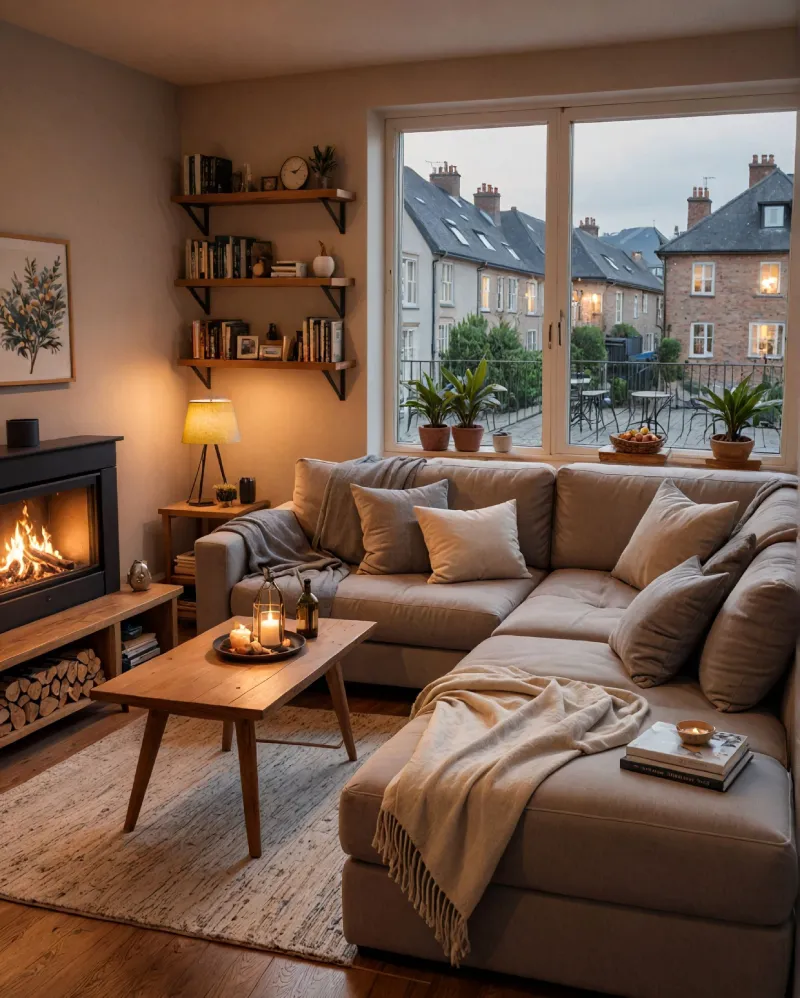
Photo: cozy home meditation corner with soft lighting acoustic panels peaceful interior design, via i.pinimg.com
At some point, home stopped feeling like a refuge.
For a lot of Americans, the place where they're supposed to rest has become just another arena of noise — traffic bleeding through thin walls, the neighbor's TV, the hum of appliances, the perpetual ping of devices, and the ambient roar of a world that never quite shuts up. Add in a few years of working from home, and the boundary between "on" and "off" has essentially dissolved.
So people are doing something about it. Not by moving to the mountains (though honestly, some of them are considering it). Instead, they're redesigning the spaces they already have — building personal audio sanctuaries that serve as a kind of reset button for the nervous system. Some of these setups are elaborate. Others are a corner, a chair, and a good pair of headphones. What they share is intention.
The Noise Problem Is Bigger Than You Think
Before we talk about solutions, it's worth sitting with the scale of the problem. Environmental noise isn't just irritating — it's a legitimate public health issue. The World Health Organization has linked chronic noise exposure to elevated cortisol levels, disrupted sleep, cardiovascular stress, and impaired cognitive function. In dense American cities, many residents are exposed to traffic noise levels that exceed safe thresholds for significant portions of the day.
And it's not only outdoor noise. The modern American home has gotten louder from the inside, too. Smart speakers, streaming services, notification sounds, HVAC systems, and the general digital buzz of connected living create a low-grade sonic environment that many of us have simply stopped noticing — until we notice how bad we feel.
Dr. Elaine Torres, an environmental psychologist based in New York, studies how built environments affect psychological wellbeing. "Humans evolved in acoustic environments that had a natural rhythm — sound and silence in balance," she explains. "What we've created instead is near-constant auditory stimulation with very little recovery time. The nervous system doesn't get to fully discharge. Over time, that has real consequences for mood, cognition, and physical health."
The growing interest in home acoustic design, she says, is a direct response to this deficit. "People are instinctively seeking what their nervous systems are missing."
What an Audio Sanctuary Actually Looks Like
Forget the image of a soundproofed recording studio. Most personal audio sanctuaries are modest, practical, and deeply personal. The common thread is intentionality — a space set apart from the rest of the home's activity, designed specifically for restorative listening.
The dedicated meditation corner. This is probably the most accessible version. A corner of a bedroom or living room, furnished with a comfortable chair or floor cushion, soft lighting, and a simple Bluetooth speaker or quality headphones. The key is that this space is used only for quiet, restorative activities — no work, no scrolling, no multitasking. Over time, the brain begins to associate the space with rest, which makes it easier to actually get there.
Lena Park, a graphic designer in Portland, Oregon, converted a small alcove near her bedroom window into what she calls her "sound nook." It fits a reading chair, a salt lamp, and a small speaker. "I have a playlist of forest sounds and slow ambient music that I only play in that spot," she says. "Within two or three minutes of sitting down, I can feel my shoulders drop. It's like my body already knows what's coming."
The bedroom audio upgrade. Sleep is where a lot of people start their acoustic journey, and for good reason — bedroom noise is one of the most well-documented disruptors of sleep quality. Beyond white noise machines (a longtime staple), Americans are increasingly investing in sleep-specific audio: pillow speakers that let partners listen to different sounds, spatial audio systems that wrap the room in layered nature recordings, and smart devices that gradually shift soundscapes through the night to support sleep cycles.
The full acoustic treatment. For those who want to go deeper, actual soundproofing is on the table. This doesn't have to mean tearing out walls. Acoustic panels — which absorb sound rather than blocking it — have come a long way aesthetically, and plenty of companies now make versions that look more like art than foam. Heavy curtains, area rugs, upholstered furniture, and bookshelves all contribute meaningfully to a room's acoustic profile by absorbing reflected sound. The result is a space that feels noticeably quieter and more contained, even without structural changes.
The Psychology of Intentional Space
There's a reason spas feel the way they do. It isn't just the lighting or the temperature — it's the acoustic environment. The deliberate absence of intrusive noise, combined with carefully chosen ambient sound, signals safety to the nervous system. Heart rate slows. Muscle tension releases. The body downshifts.
This is exactly what a well-designed home sanctuary can replicate, and the psychological research backs it up. Studies on what's called "restorative environments" consistently find that spaces perceived as calm, ordered, and acoustically gentle support faster stress recovery and improved mood. The effect is amplified when a space is used consistently for restorative purposes — the association itself becomes part of the healing.
What's interesting is how this intersects with the broader wellness audio movement. Platforms curating soundscapes specifically for relaxation — layered rain, binaural forests, slow ambient drones — have seen significant upticks in use among people who describe themselves as building home wellness routines. The space and the sound reinforce each other. A quiet room with intentional audio becomes greater than the sum of its parts.
Practical Starting Points
You don't need a renovation budget or a dedicated room to begin. Here's a grounded, accessible approach:
Start with subtraction. Before adding anything, identify the noise sources in your space that are within your control. Turn off devices when they're not in use. Silence non-essential notifications. Consider whether background TV or music has become ambient noise you're no longer actually enjoying.
Add soft surfaces. Rugs, curtains, throw pillows, and upholstered furniture absorb sound and reduce echo. Even modest additions can make a room feel noticeably quieter.
Designate one spot. Choose a single area — even just a chair — that becomes your intentional listening space. Use it only for that purpose. Consistency builds the association.
Invest in your audio quality. You don't need high-end audiophile equipment, but a quality pair of over-ear headphones or a speaker with warm, full-range sound makes a meaningful difference in how immersive and calming a soundscape feels. This is one place where a modest upgrade pays dividends quickly.
Curate your sound library. Explore what actually works for your nervous system. Some people find ocean waves perfect; others prefer forest ambience, gentle rain, or slow instrumental music. The "right" soundscape is the one that reliably helps you land somewhere quieter inside yourself.
Reclaiming the Home as a Place to Actually Rest
There's something quietly countercultural about insisting that your home serve your nervous system. We live in a world optimized for stimulation — more content, more connection, more noise. Carving out a corner of your life that exists specifically for the opposite is an act of genuine self-care, not the hashtag kind.
The Americans building these spaces aren't hermits or minimalists (though some are). They're people who've figured out that rest is a practice, not a default — and that the environment you rest in matters as much as the intention you bring to it.
Your sanctuary doesn't have to be perfect. It just has to be yours.
Tune in. Breathe deep. Come home.