The Calm That Keeps You Chained to Your Desk
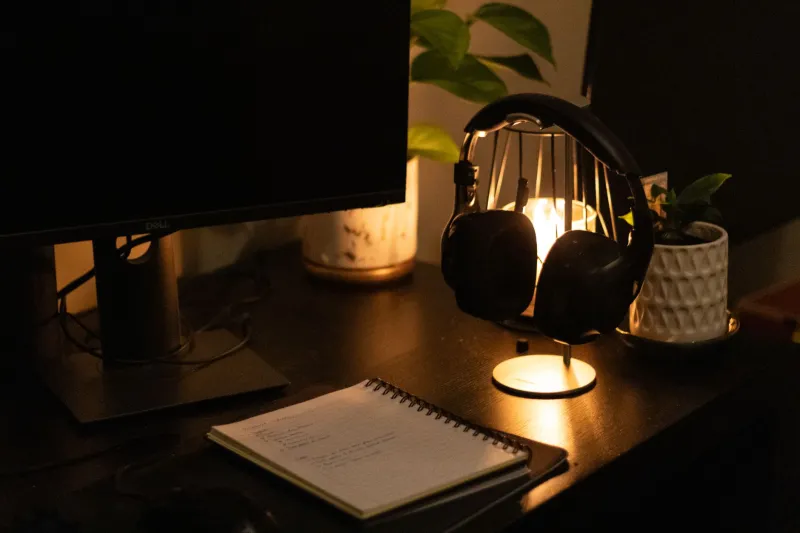
Picture this: it's 6:45 p.m. on a Tuesday. Your coworkers have long since packed up and headed out. But you're still at your desk, fingers moving across the keyboard, a gentle loop of Tibetan singing bowls humming through your earbuds. You don't feel exhausted. You don't feel frantic. You feel... fine. So you keep going.
That feeling of "fine" might be the problem.
A quiet but growing conversation among productivity researchers and workplace wellness professionals is starting to poke holes in one of the most popular assumptions about ambient audio at work: that it helps you decompress. The emerging counterargument? For a lot of people, spa-style music and nature soundscapes aren't releasing the pressure valve — they're just hiding the gauge.
What the Research Is Starting to Suggest
Studies on ambient sound and cognitive performance have generally painted a rosy picture. Low-level background noise can reduce distraction. Certain frequencies appear to lower cortisol. Nature sounds, in particular, have been linked to improved focus and reduced perceived stress. On paper, popping on a rainforest playlist while you grind through your inbox sounds like a solid wellness move.
But here's where it gets complicated. A handful of newer studies, including work coming out of organizational psychology departments, are flagging something researchers are calling "fatigue masking" — the idea that calming audio can suppress the subjective experience of tiredness without actually addressing the underlying physiological depletion. In other words, you stop feeling as worn out, but your body and brain are still accumulating the costs of overwork.
"There's a meaningful difference between feeling calm and being recovered," says Dr. Priya Nandan, a workplace wellness consultant who works with mid-size companies across the Midwest. "Wellness audio can genuinely shift your emotional state in the short term. What it can't do is replace actual rest. And when it makes you feel good enough to keep working, it can delay the recovery your system actually needs."
The Productivity Trap Hidden in Your Playlist
This is where the paradox gets real. Most of us turn to ambient audio as a coping tool — a way to carve out a little mental breathing room inside a relentless schedule. And it works, at least on the surface. The problem is that "working" and "recovering" start to blur together when your environment is engineered to feel soothing.
Think about the logic of a traditional spa. You go, you unplug, you surrender your phone, you let trained professionals guide your nervous system toward genuine rest. The whole architecture of the experience is built around stopping. Bringing that soundtrack into a work environment and expecting the same result is a bit like putting a hammock in your open-plan office and wondering why nobody's actually napping in it.
Kate Ellison, a burnout recovery coach based in Portland who works primarily with high-performing professionals, sees this pattern constantly. "My clients often come to me having tried every audio tool out there — binaural beats, ASMR, lo-fi playlists, the works. And a lot of them report that those tools helped them push through hard stretches. That's exactly the issue. Pushing through is not the same as recovering. It's the opposite."
Ellison notes that many of her clients have effectively used wellness audio to extend their workdays by two to three hours. Not because they're workaholics in the dramatic sense, but because the audio made the extra hours feel sustainable in the moment — and invisible in terms of accumulating damage.
Why Your Brain Doesn't Know the Difference
Part of what makes this so tricky is neurological. Your brain is remarkably good at updating its stress assessment based on environmental cues. Lower the lights, slow the tempo, introduce some pink noise or flowing water sounds, and your nervous system genuinely starts to downshift — even if you're still deep in a spreadsheet or hammering out client emails.
This is the same mechanism that makes spa environments feel so transformative. The sensory inputs signal safety, and your body responds accordingly. The catch is that this response is somewhat superficial. It adjusts how you feel, not what you've done. The cognitive load of the work, the decision fatigue, the emotional labor — those costs are still being tallied in the background.
"Your brain can be tricked into a parasympathetic lean while you're still actively depleting your resources," explains Marcus Webb, a neuroscience researcher who studies attention and recovery. "The audio creates a kind of buffer between you and your fatigue signals. For short bursts, that's potentially useful. Extended over several hours, it can mean you're running a deficit you don't know about until you crash."
The Longer Hours Nobody's Counting
There's also a cultural dimension to this that's very American. The U.S. already has a complicated relationship with overwork — we celebrate hustle, romanticize the grind, and often treat rest as something you earn rather than something you need. Into that context, wellness audio arrives as a kind of guilt-free productivity enhancer. It lets you feel like you're taking care of yourself while still getting things done.
And that's an incredibly appealing package. It's also, potentially, a wolf in sheep's clothing.
If your ambient playlist is helping you stay at your desk until 8 p.m. when you would otherwise have called it quits at 6, the math on whether it's actually improving your wellbeing gets murky fast. You may be producing more output in the short run. But the research on chronic overwork is unambiguous: longer hours correlate with worse health outcomes, diminished cognitive performance, and higher burnout risk — regardless of how chill the background music was.
A Better Way to Use Wellness Audio at Work
None of this means you should throw out your spa playlist. The goal is to use it more intentionally.
Experts suggest treating ambient audio as a signal tool rather than a background wallpaper. Use it to mark genuine transitions — a five-minute breathing session at the start of the day, a deliberate mid-afternoon reset, a clear "closing time" ritual that helps you actually close. When the music is paired with stopping, it reinforces recovery. When it just runs in the background indefinitely, it can become part of the machinery of overwork.
Ellison recommends what she calls "sound anchoring" — picking a specific track or soundscape that you only ever listen to when you're done working. Over time, your brain associates that audio with genuine rest, not just a softer version of hustle.
The bigger shift, though, is philosophical. Wellness audio is a tool. Like any tool, its value depends entirely on how you use it. A spa exists to help you stop. Your earbuds, plugged into a bamboo flute loop while you answer one more email, are doing something quite different — even if they feel the same.
Tune in. Breathe deep. And then — this part matters — actually unwind. Put the laptop down. The playlist will still be there tomorrow.