Your Bathroom Isn't a Spa and Your Brain Knows It
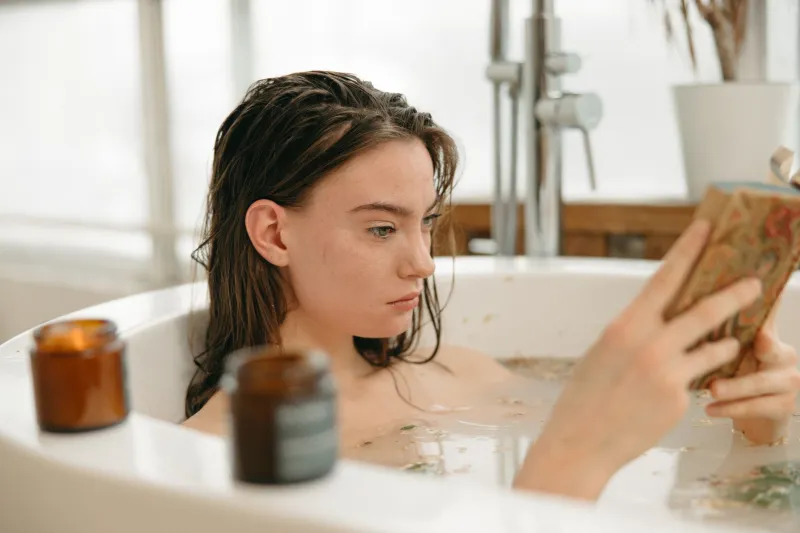
Let's paint a picture. You've lit three candles. You've got a bamboo tray balanced across the tub holding a glass of sparkling water and a face mask you bought three months ago. Your phone is propped on the toilet lid playing a 'Deep Forest Spa' playlist. The bath bomb is fizzing. Everything looks exactly like the Pinterest board you've been saving to for two years.
And yet — somehow — you're more stressed than you were before you started.
If that sounds familiar, you're not alone, and you're definitely not doing it wrong. There's actually a pretty fascinating reason why recreating a spa at home so often ends up feeling like homework instead of a holiday.
The Illusion of Control (And Why It Backfires)
Real spas work partly because you surrender control the moment you walk through the door. Someone else picked the music. Someone else set the temperature. The lighting is handled. Your only job is to exist inside the experience. That surrender is a huge part of why it feels so restorative.
At home, you're the spa director, the receptionist, the aesthetician, and the guest — all at once. You're making a hundred micro-decisions before you've even turned on the faucet. Which playlist? How hot? Lights on or off? Should you answer that text first or will it bother you if you don't?
Researchers who study cognitive load — basically, how much mental effort your brain is juggling at any given moment — have found that even small decisions can chip away at your ability to actually relax. Every choice you make in the name of 'setting the mood' is another small tax on your already-depleted mental bandwidth. By the time you finally lower yourself into the tub, your brain has already been working overtime.
The Comparison Problem Nobody Talks About
There's another layer here that's worth sitting with. Most of us have a reference point for what a spa is supposed to feel like — whether that's a real visit, a hotel experience, or just the extremely aspirational content we've absorbed from Instagram and Netflix. That mental image becomes a kind of standard.
And standards are tricky things. When your home setup doesn't quite match the fantasy — when the candle smells a little off, the bath water cools too fast, or the neighbor's dog starts barking right as you hit the most serene part of your ambient soundscape — your brain doesn't just shrug it off. It registers the gap between expectation and reality as a mild form of failure.
That's not dramatic. That's just how comparison works neurologically. The disappointment doesn't have to be huge to quietly undermine the whole experience.
Why Sound Alone Can't Save a Chaotic Space
A lot of people turn to wellness audio as the fix — if the environment isn't cooperating, maybe the right playlist can carry the whole thing. And audio genuinely does a lot of heavy lifting when it comes to shifting your nervous system. We've written about this plenty here at Spadio. But even the most perfectly engineered relaxation soundscape has limits when it's fighting against context.
Your brain is constantly reading environmental cues, not just auditory ones. The pile of laundry you can see from the tub. The toothpaste splatter on the mirror. The to-do list you mentally started composing somewhere around the second candle. Sound can soften those signals, but it can't erase them entirely — especially when your environment is also the same place where you brush your teeth, argue with your partner about whose turn it is to clean the grout, and scroll through work emails at midnight.
Spas have an advantage that's almost impossible to replicate at home: they exist outside of your regular life. That physical and psychological separation is doing enormous work. When you're in a dedicated wellness space, your brain gets a clear contextual signal that says this is rest time. At home, those signals are muddled at best.
The Effort Paradox
Here's the uncomfortable truth at the center of all this: relaxation is one of the few things that gets harder the more deliberately you pursue it. Psychologists sometimes call this the ironic process — the idea that actively trying to suppress or achieve a mental state tends to produce the opposite effect. Tell yourself not to think about something and you'll think about it constantly. Try desperately to fall asleep and suddenly sleep feels impossible.
The same dynamic applies to unwinding. The more energy you pour into constructing the perfect relaxation environment, the more your brain treats relaxation as a goal to be achieved rather than a state to drift into. And goals create pressure. Pressure creates the exact kind of low-grade stress you were trying to escape in the first place.
So What Actually Helps?
None of this means you should abandon the idea of a home wellness ritual. It just means the approach probably needs some recalibrating.
Lower the bar dramatically. Instead of trying to recreate a full spa experience, pick one sensory element and let that be enough. A single good-smelling candle. Ten minutes of a calming audio track. A warm face cloth. One thing, done without fuss, tends to land better than an elaborate setup that requires thirty minutes of prep.
Let go of the aesthetic. The Instagram-worthy bath setup is genuinely beautiful, but it's also performing wellness rather than experiencing it. If you find yourself adjusting the candle placement for the third time, that's a signal worth noticing.
Use audio as an anchor, not a stage set. A well-chosen soundscape — rain, soft ambient tones, gentle binaural frequencies — can help signal to your nervous system that it's time to downshift without requiring you to transform your entire space. It's a low-effort, high-return move that doesn't demand anything from you except pressing play.
Give yourself permission to have an imperfect rest. The neighbor's dog is going to bark. The water will cool down. The candle might smell slightly more 'gift shop' than 'mountain retreat.' That's okay. Rest doesn't have to be flawless to be restorative.
The Actual Point of All This
The home spa fantasy is appealing for a reason — it represents something we're genuinely hungry for, which is a moment that belongs entirely to us. A pocket of time where the demands of work, family, and the relentless churn of modern life can't quite reach.
That need is real and worth honoring. But the method of honoring it matters. When the ritual becomes a performance, when unwinding becomes a project, you've already lost the thread.
The spa you're looking for isn't really a place. It's a state of permission — permission to stop optimizing, stop performing, and just be somewhere quiet for a while. Turns out, you don't need a bamboo tray for that.